
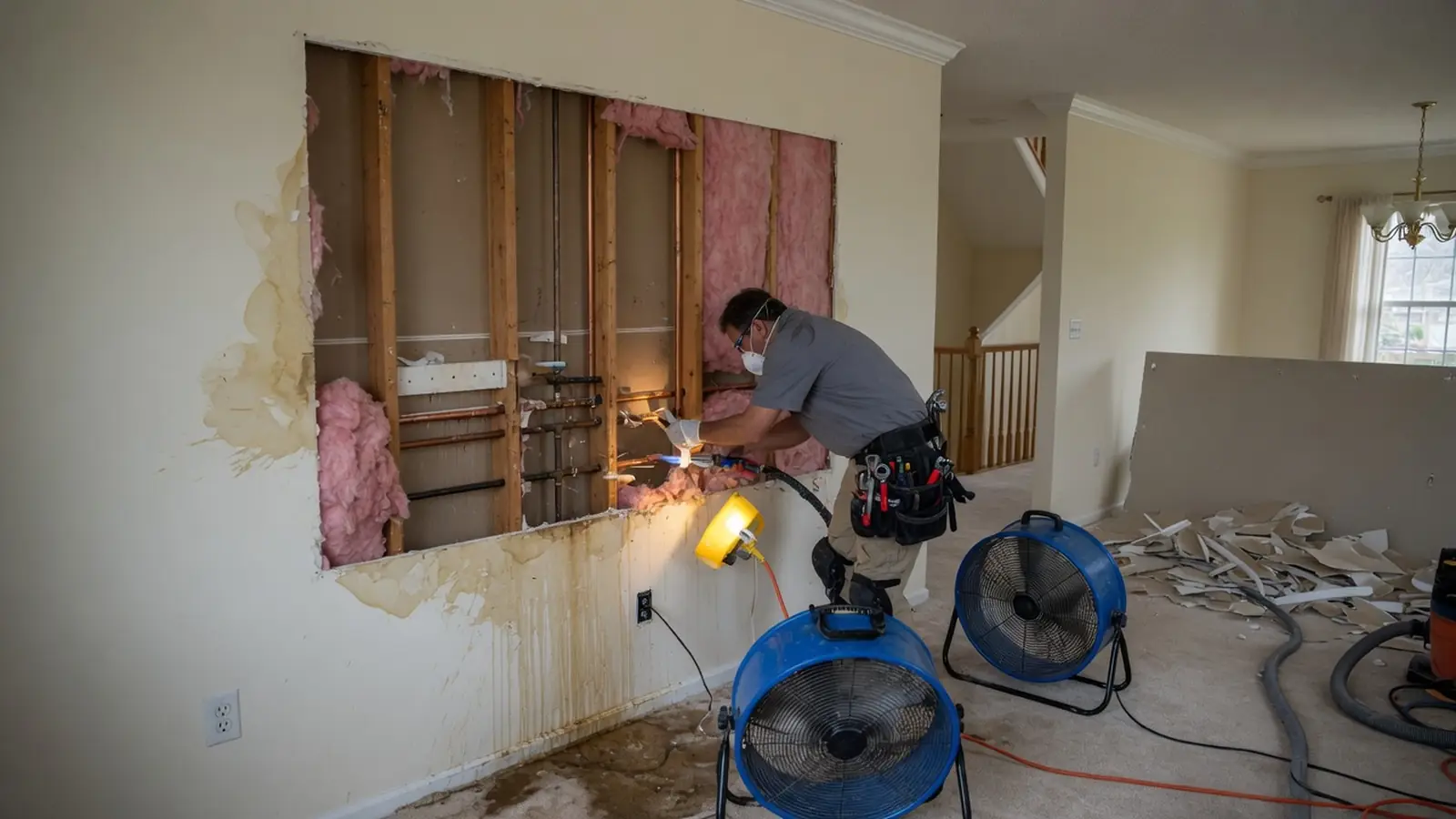
Katy Storm Damage
Active rainwater intrusion through ceiling drywall during severe storms leaves residents panicked over immediate water containment and ceiling collapse risks. Our certified technicians mobilize rapidly with industrial extraction equipment to halt moisture progression before secondary damage compromises the building. We stabilize the property, document damage for insurance, and restore structural integrity.
Comprehensive Storm Water Extraction And Structural Drying
Severe Gulf Coast squalls and tropical systems frequently push wind-driven rain sideways into residential attic vents, saturating ceiling insulation without causing direct roof punctures.
Hail activity across our service area is uneven year to year: 2024 logged 950 radar signatures while 2022 logged only 216, a 4.4x spread.
Comparing the two halves of 2021-2025 across the local area, radar hail signatures went from 680 to 1,550, a rise of 128%.
Homeowners often describe how sudden weather extremes batter exterior envelopes throughout neighborhoods like Cinco Ranch and Cane Island.
Property owners facing sudden storm emergencies can explore our dedicated emergency water mitigation and restoration services to stabilize framing and drywall before degradation spreads.
Our crews arrive fully equipped with thermal cameras and industrial moisture meters to pinpoint trapped moisture pockets behind baseboards and insulation batts.
Our Emergency Storm Recovery Protocol
A pattern echoed in public discussions is that residents facing extensive storm water intrusion struggle to prioritize drywall removal, industrial drying equipment setup, and insurance claims documentation during chaotic post-storm conditions. Our structured four-step protocol eliminates guesswork by coordinating containment, extraction, and drying immediately.
- Damage Assessment And Moisture Mapping. We inspect the entire structure using thermal imaging and moisture meters to map moisture migration. Homeowners often describe how structural roof racking from high storm winds creates hidden pathways for chronic rainwater intrusion inside wall cavities during subsequent storms.
- Water Extraction And Controlled Removal. Technicians pump out standing water and remove compromised ceiling drywall and saturated insulation to relieve weight. When rising waters enter from local bayous, you can review our comprehensive flood cleanup procedures designed specifically for deep water extraction.
- Targeted Structural Drying. Drying strategies differ drastically depending on whether moisture originates from foundation slab movement or external reservoir floodwaters. We position commercial centrifugal air movers and low-grain refrigerant dehumidifiers calibrated to the specific water source and material permeability.
- Secondary Damage Prevention And Claim Documentation. Property insurance policies typically cover water mitigation costs only if the owner takes immediate, documented steps to halt secondary damage. We provide itemized moisture logs, psychrometric readings, and photo documentation to streamline your carrier claim.
Standards That Protect Your Property
In public forums, homeowners question whether high-dollar remediation quotes with negative air scrubbers and complete plastic barrier containment are standard protocol or unnecessary. We maintain full transparency by explaining industry-standard containment measures and deploying HEPA air filtration only where contamination or air quality demands it. If secondary fungal issues arise from delayed drying, learn more about certified mold remediation so you understand exactly what protocols are required to protect indoor air quality without unnecessary charges.
Roof Intrusion Containment
We stabilize active leaks from wind-driven rain and wind-damaged decking. Our crew secures temporary containment, removes wet ceiling drywall, and extracts water before framing absorbs persistent moisture.
Attic And Wall Cavity Drying
Wind-blown rain often saturates attic insulation through soffit and gable vents. We extract wet insulation batts and force dry air through closed wall cavities using specialized injection drying systems.
Insurance Loss Mitigation
Insurance carriers require prompt action to prevent microbial growth. We deliver comprehensive daily drying logs, thermal photos, and direct coordination to substantiate your storm claim.
Our Approach To Storm Recovery
We respond to severe weather events with calibrated industrial drying equipment and methodical moisture documentation. Our focus remains on immediate stabilization, thorough moisture tracking, and honest communication without inflated claims.
- 12Zip Codes Served
- 5Service Areas
- 3Services Offered
Here is how property owners evaluate our emergency storm extraction and structural drying response following severe weather events.
“Flash flooding blocked our access road during the second band of the storm, which delayed initial arrival by two hours. Once the water receded enough for their trucks, the crew worked straight through midnight to extract water from our ceilings and set up drying gear. They kept us updated the entire time and made up for lost hours completely.”
Marcus V.
“My eighty-two-year-old mother lives with us and uses a walker, so having noisy equipment running through the hallway was a major worry. The team routed their heavy hoses cleanly along the perimeter, taped down every cord, and positioned air scrubbers so her bedroom remained quiet and accessible. Their consideration for her safety made an unbearable situation much easier.”
Elena R.
“Another outfit offered a cheap quote to simply pull up the carpet pad and run two household fans. This company took moisture readings inside our wall cavities, showed us where rain had wicked up the studs, and used commercial dehumidification to dry the actual framework. Spending the money on their thorough approach saved us from hidden mold behind the baseboards.”
David H.
“Our HOA and local building guidelines required strict documentation before any exterior openings or ceiling penetrations could be altered. The crew cataloged the exact structural moisture points, filed the required inspection notices immediately, and passed the adjuster review without a single revision. Everything was handled strictly by the book from start to finish.”
Sonia T.
Frequently Asked Questions
How quickly should storm water mitigation begin after a roof leak?
Storm water extraction should begin within 24 to 48 hours to prevent microbial growth and stop ceiling drywall from collapsing under water weight. Immediate containment halts progressive structural degradation and satisfies standard insurance requirements for mitigating secondary losses.
Does homeowners insurance cover storm water mitigation costs?
Most property insurance policies cover water mitigation costs if the policyholder acts promptly to document damage and halt secondary issues. Carriers expect homeowners to protect the premises immediately using certified drying contractors who supply comprehensive psychrometric logs.
How does wind-driven rain enter homes without roof punctures?
Severe tropical squalls frequently drive rain horizontally into attic vents and soffit seams, saturating insulation without tearing shingles. Water then accumulates above ceiling drywall until saturation causes sagging, staining, or structural collapse inside living areas below.
Why do drying strategies differ between floods and storm leaks?
Drying plans depend on whether water originates from clean rainwater penetration, shifting foundations, or contaminated external runoff. Category 3 floodwaters require aggressive material removal and antimicrobial sanitization, whereas overhead rainwater focuses heavily on rapid structural dehydration.
Are plastic barriers and air scrubbers required for storm drying?
Containment zones and HEPA air scrubbers are essential whenever airborne contaminants, mold spores, or structural dust threaten indoor air. Standard drying of clean rainwater may only need targeted equipment, but compromised drywall and microbial risks warrant complete physical isolation.