
Katy Mold Remediation
Standing water trapped in concealed cavities initiates rapid mold growth and multiplies structural breakdown if not decontaminated immediately. Our certified specialists deploy commercial containment barriers and industrial air scrubbers to isolate airborne spores and restore clean indoor air. We stop fungal spread at the source to preserve your structural framing and protect your family.
Active backup? (281) 555-0126.
Certified Fungal Mitigation And Structural Drying
The median owner-occupied home in this area was built in 2003 (Census ACS 5-year), meaning aging supply lines and original HVAC systems are reaching critical replacement intervals.
Persistent summer humidity creates ideal conditions for dormant fungal spores to amplify inside wall cavities within 24 to 48 hours of an unmitigated plumbing or roof leak.
A pattern echoed in public discussions is that overflowing attic condensate drain pans saturate ceiling insulation and cause sheetrock sagging and water damage in rooms below.
Trade discussions frequently highlight how improperly sealed in-wall plumbing fittings can withstand line pressure for up to a year before failing suddenly, causing extensive hidden moisture damage.
When property owners need emergency water damage restoration and moisture extraction services, our technicians respond immediately to halt microbial colonization.
Every project begins with non-invasive thermal imaging and calibrated pinless moisture meters to map hidden migration behind baseboards without unnecessary demolition.
We isolate active work zones under negative pressure so your family breathes uncontaminated air throughout the remediation project.
Our Certified Microbial Remediation Protocol
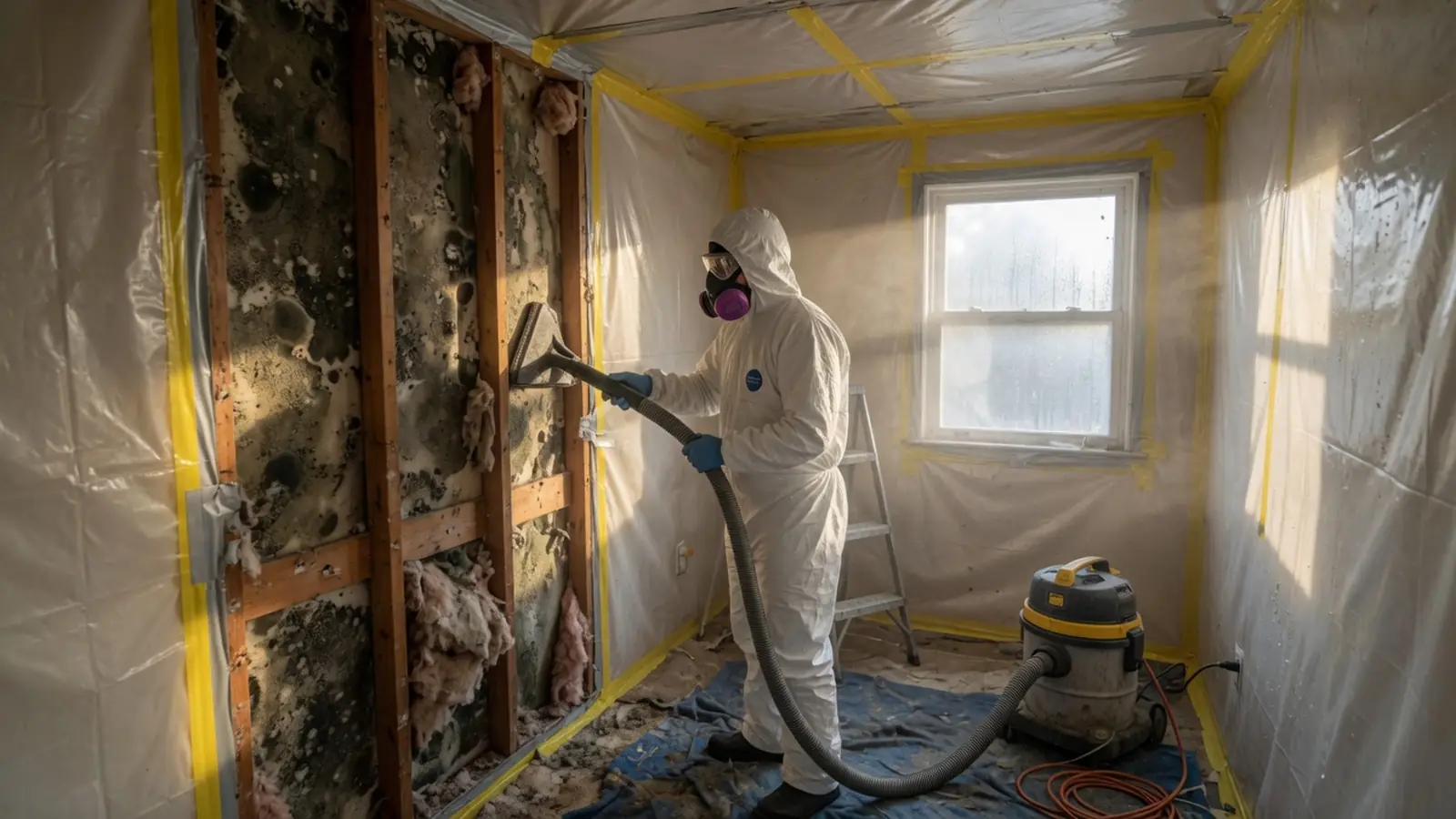
Following severe moisture events, remediators erect polyethylene plastic containment barriers under negative air pressure with HEPA filtration to prevent airborne spores from cross-contaminating unaffected rooms. If your property experienced standing water, scheduling comprehensive flood cleanup and water removal ensures structural framing dries thoroughly before spores colonize hidden cavities.
- Precision Moisture Mapping And Assessment. Technicians evaluate framing with digital hygrometers, FLIR infrared cameras, and surface swabs to establish the exact boundaries of fungal growth.
- Negative Air Containment Setup. We seal doorways with 6-mil poly sheeting and vent continuous HEPA air scrubbers outdoors to maintain depressurization and trap microscopic particles.
- Porous Material Removal And HEPA Vacuuming. Unsalvageable drywall and saturated insulation are bagged inside containment, while framing timbers undergo detailed HEPA vacuuming and wire brushing.
- Antimicrobial Treatment And Deep Dehumidification. Exposed framing receives EPA-registered botanical antimicrobials before commercial LGR dehumidifiers draw deep-seated moisture down to target equilibrium levels.
Uncompromising Safety And Clean Air Standards
Our remediation methodology adheres strictly to established IICRC S520 standards for professional mold remediation. We never mask microbial odors with perfumes or cut corners on physical containment. In cases where roof punctures or driving rain introduced moisture, addressing exterior storm damage and structural intrusion prevents recurring fungal outbreaks. We verify complete moisture equilibrium before taking down plastic barriers.
Structural Stud And Framing Decontamination
Discovering active fungal growth on wall studs after a plumbing leak raises confusion over whether surface antimicrobial sprays work or certified remediation is required. Our technicians mechanically remove established hyphae from framing lumber using abrasive techniques and certified HEPA filtration before treating the wood.
Attic And Ceiling Mold Abatement
Roof leaks and failing AC condensate pans frequently lead to saturated drywall and mold on ceiling joists. We safely isolate attic access hatches, extract contaminated insulation, and restore balanced airflow to keep roof decking dry.
HVAC And Air Duct Sanitization
Microscopic fungal spores circulating through supply plenums compromise air quality throughout your entire residence. We clean and decontaminate ductwork surfaces using hospital-grade botanical solutions to eliminate musty circulation.
Our Approach To Thorough Remediation
Every remediation project is conducted with scientific rigor, using calibrated moisture detection instruments and negative pressure containment to protect unaffected living spaces.
- 10Zip Codes Served
- 6Service Areas
- 3Services Offered
Read genuine experiences from local property owners who trusted our crew to eliminate mold hazards and restore healthy indoor air.
“The negative air containment they built around our master bathroom had airtight plastic seams and reinforced zippered access doors that did not leak a single speck of dust. When they completed the stud sanding and encapsulated the framing, the wood looked completely clean and smooth. Their technical precision gave our family total peace of mind.”
Marcus B.
“Our written estimate outlined the exact scope from air scrubbers to drywall removal, and the final invoice matched that quote down to the dollar without any surprise change-orders. The crew walked us through each itemized expense before setting up equipment so we understood the full cost. Having transparent pricing during a stressful water leak was a massive relief.”
Elena R.
“Every afternoon before packing up, the crew vacuumed the hallway pathways with HEPA filters and hauled bagged debris straight to their truck so our living room remained spotless. They sealed off the work zone tightly each evening so our kids could walk through the house safely without smelling any musty odors. You could barely tell major demolition was taking place behind that plastic.”
David K.
“Daily photo messages and moisture log updates arrived on my phone every morning without me ever having to ask for status reports. The lead technician explained the relative humidity readings after each dry-down check so we knew exactly when reconstruction could begin. Excellent communication from start to finish made this entire disruption painless.”
Sarah T.
Frequently Asked Questions
How do buyers detect hidden moisture and improper mold cleanup in previously flooded properties?
Buyers should verify framing condition with thermal imaging, pinless moisture meters, and air clearance testing before completing a home purchase. Prospective buyers of previously flooded homes struggle to identify telltale signs of trapped structural moisture, damaged framing, and improper mold remediation. Our pre-purchase moisture evaluations inspect concealed wall cavities, subflooring, and baseboard framing to ensure past flood mitigation followed certified containment and complete drying protocols.
Are negative air scrubbers and plastic containment barriers necessary for mold removal?
Negative air machines and sealed plastic barriers are essential industry standards that prevent toxic spores from spreading to unaffected living areas. Homeowners question whether high-dollar remediation quotes with negative air scrubbers and complete plastic barrier containment are standard protocol or unnecessary. Standard IICRC S520 guidelines mandate physical isolation because disturbing fungal colonies releases millions of microscopic spores that readily cross-contaminate clean rooms.
Does spraying bleach on damp drywall kill mold roots or is material removal required?
Bleach only treats visible surface discoloration and cannot penetrate porous drywall, requiring physical removal of contaminated materials. Will spraying household bleach on damp drywall kill mold roots, or does remediation require removing the porous building materials entirely? Bleach contains mostly water, which actually feeds fungal hyphae embedded deep inside gypsum and paper backing, making complete demolition and disposal of porous drywall necessary.
How long does professional mold remediation take from start to final clearance?
Most residential remediation projects require between one and three days depending on containment size and framing moisture levels. The initial phase involves setting up containment barriers and air scrubbers, followed by controlled selective demolition and HEPA vacuuming. Once structural framing is treated with antimicrobial agents, commercial dehumidification equipment runs continuously until wood moisture reaches safe baseline readings.
What permits or certifications govern residential mold remediation?
State guidelines require licensed mold remediation contractors and third-party consultants to independently test and issue clearance certificates. To protect homeowners from conflicts of interest, certified remediation protocols require separate entities for initial protocol assessment and final post-remediation clearance testing. Upon successful air sampling, property owners receive an official certificate of mold remediation verifying the structure is clean.